Theta suite
Theta Suite is your one-line solution to replacing fragmented, hard-to-wire authentication setups with a unified security stack. It wires together OIDC authentication, LDAP user directories, automated host enrollment, and centralized secret management in a single command. It eliminates the manual configuration friction so you get secure access, auditability, and multi-site replication when you need more than one location.
Who This Is For
- Self-Hosters & Homelab Engineers: Anyone running local bare metal, Proxmox, or private VPS nodes who wants enterprise-grade OIDC, multi-master LDAP, PAM/SSSD host enrollment, and OpenBao secret management without spending days manually wiring glue code.
- Small-to-Medium Businesses (SMBs): Infrastructure teams that need a unified, directory-driven access plane across both web apps and Linux boxes, but want to bypass per-user SaaS taxes (Okta, Azure AD) and cloud vendor lock-in.
- DevOps & Systems Operators: Engineers who value idempotent, single-command
deployments (
./setup.sh) and need a production-grade baseline supporting zero-trust proxying, SSH jump-host access control, and multi-site replication out of the box.
Screenshots
The SSO Manager and the proxy it fronts, both stood up by one ./setup.sh run:
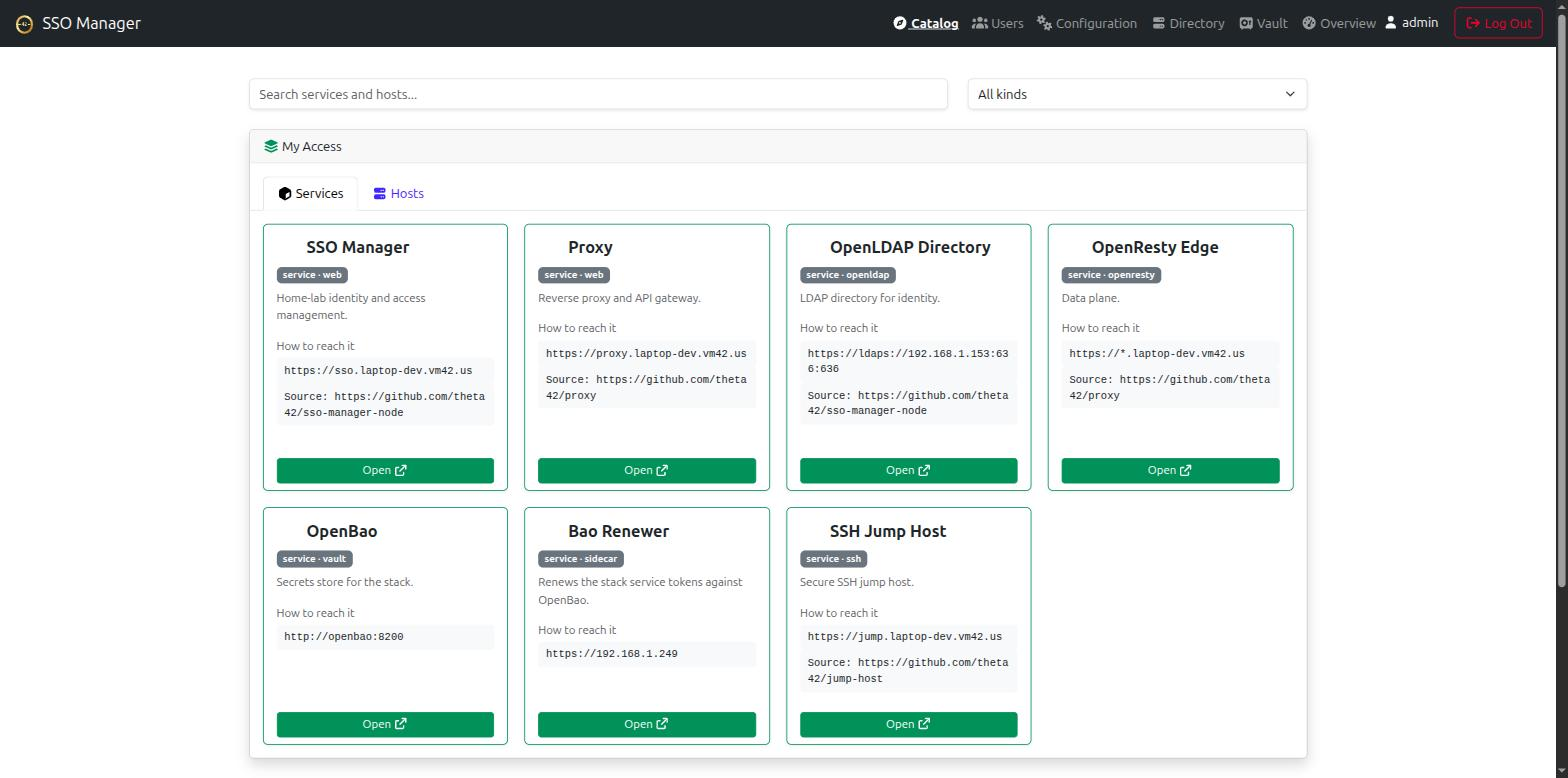
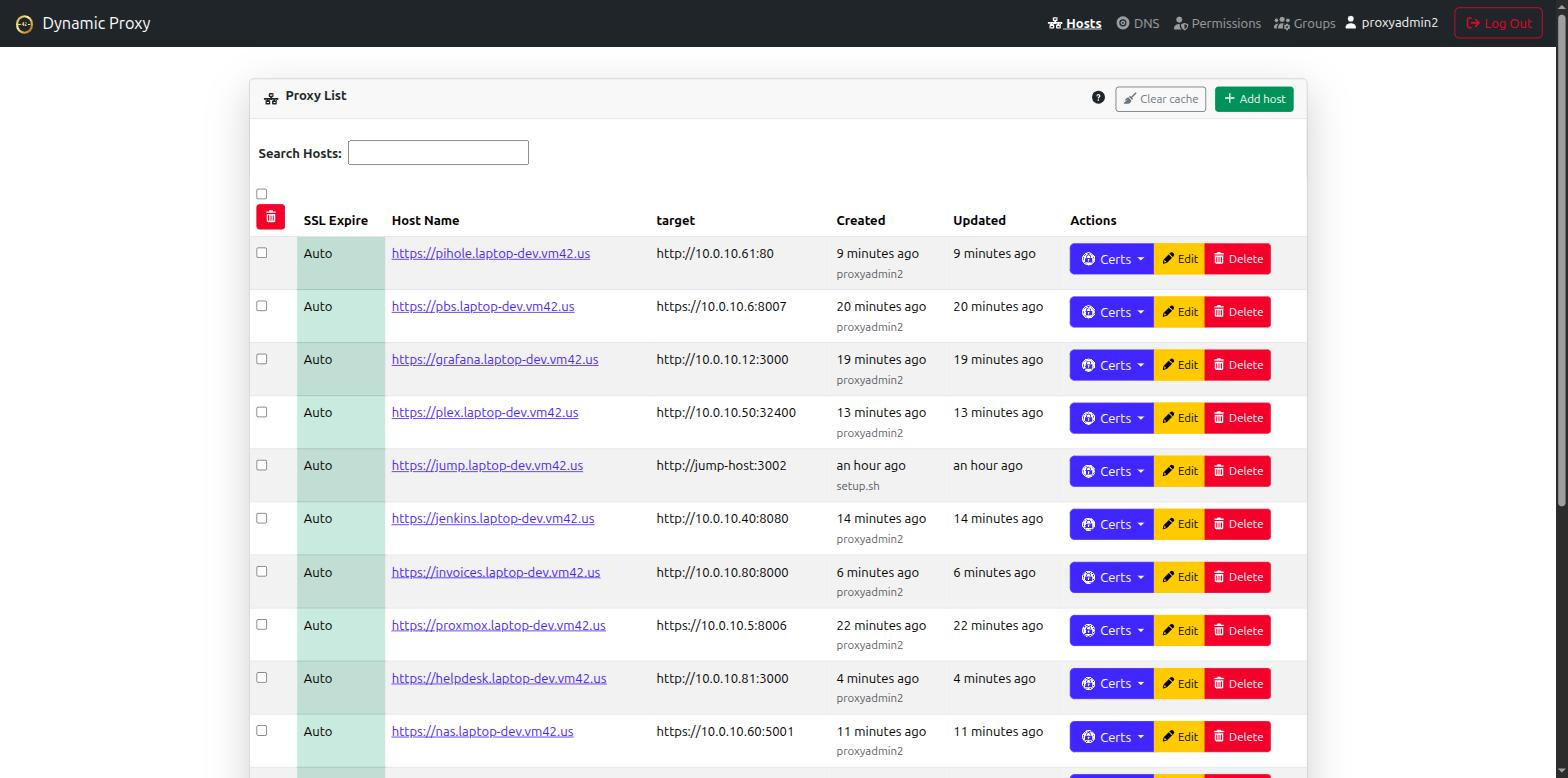
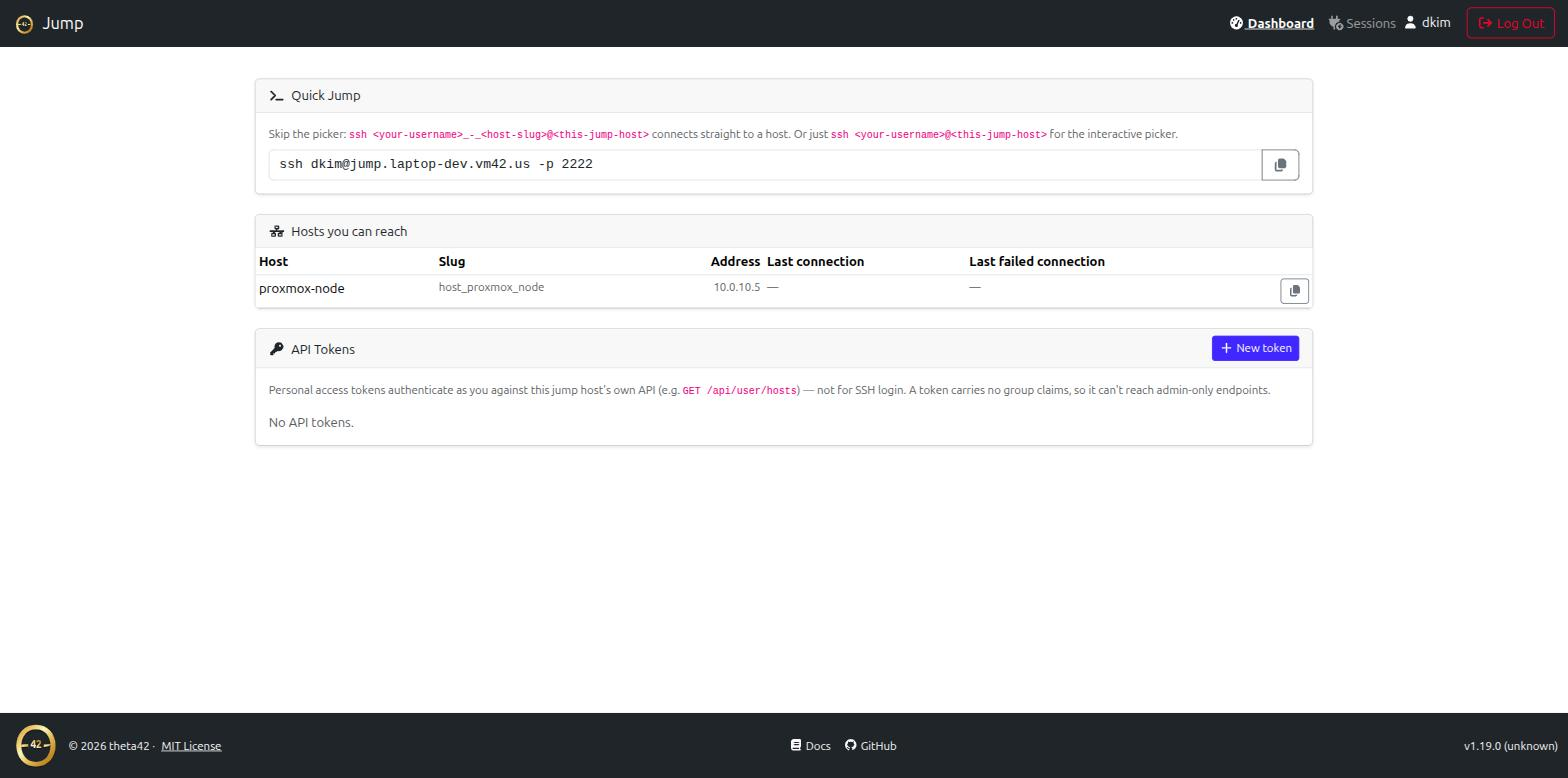
(click either screenshot to view full size)
What you get
- Unified SSO Manager: An OpenID Connect (OIDC) provider and OAuth 2.0 authorization server fronted by TLS. Includes a web dashboard for managing users, groups, and OAuth apps, plus automated invitation and password reset flows.
- Identity-Aware Reverse Proxy: Intercepts HTTP/HTTPS traffic to protect upstream applications with OIDC login and direct LDAP group authorization, featuring automatic TLS certificate issuance and automated host routing.
- Embedded LDAPS Directory: A bundled OpenLDAP core acting as your single source of truth for POSIX accounts, SSH public keys, and sudo roles. Native apps, legacy infrastructure, and Linux machines authenticate directly over encrypted LDAPS (port 636) or StartTLS.
- Hierarchical Directory Group & Permission Model: Every adopted application
and machine automatically inherits dedicated
admin,access, andcapabilitygroups generated directly from the LDAP directory. These map cleanly to real POSIX groups for fine-grained sudo and SSH privilege controls. See Group & Permission Model. - Automated Linux Host Enrollment (ldap-client): A lightweight host agent that enrolls Linux machines into the central directory. It configures system PAM/SSSD for login, applies sudo policies, distributes SSH public keys, and registers host telemetry in the primary inventory dashboard.
- Directory-Driven SSH Jump Host: A centralized bastion host that routes
inbound terminal traffic (
ssh uid_-_host@jump.<domain>) using active directory group memberships. Supports WinSCP, file transfers, interactive host pickers, and a dedicated audit interface for tracking user sessions and connection metrics. - Central Secrets Engine (OpenBao integration): Bootstraps every component against an embedded OpenBao instance to load tokens and cryptographic keys at runtime. Provides per-user secret vaults and enables administrators to mint scoped API tokens for external services. See Secrets.
- Self-Service & CI/CD API Tokens: Granular, personal access token management built directly into the web interface, allowing operators to drive system administration and automation pipelines programmatically without an active browser session.
- Multi-Site Geo-Replication: A master site and any number of spokes join with one key and one URL, staying in sync automatically (no manual LDAP config) — see Multi-Site (Master/Spoke Join). Raw N-Way Multi-Master LDAP replication is also available directly for deployments that want every site independently writable with no master/spoke concept — see Geo-Location Scaling.
- Multi-Target Load Balancing: Native reverse-proxy load balancing that distributes traffic across multiple application backends using customizable health checks and round-robin strategies.
Get it
git clone --recursive https://github.com/theta42/theta-suite.git
cd theta-suite
cp master.env.example master.env     # then edit master.env: set CFG_DOMAIN to your domain
./setup.sh
You need a Domain, some Ports Forwarded, Docker +
Docker Compose. ./setup.sh is idempotent — re-run any time to converge the
stack to ./config/. For the full config reference, architecture, see the
GitHub repository
for a details.
Related projects
- SSO Manager — the OIDC provider + LDAP directory this stack runs.
- Proxy — the reverse proxy this stack runs in front of it.
- Jump Host — the SSH jump host this stack brings up.
- ldap-client — enrolls Linux hosts into the directory this stack serves.